Showing posts with label Christopher Nolan. Show all posts

Wednesday, 23 March 2016

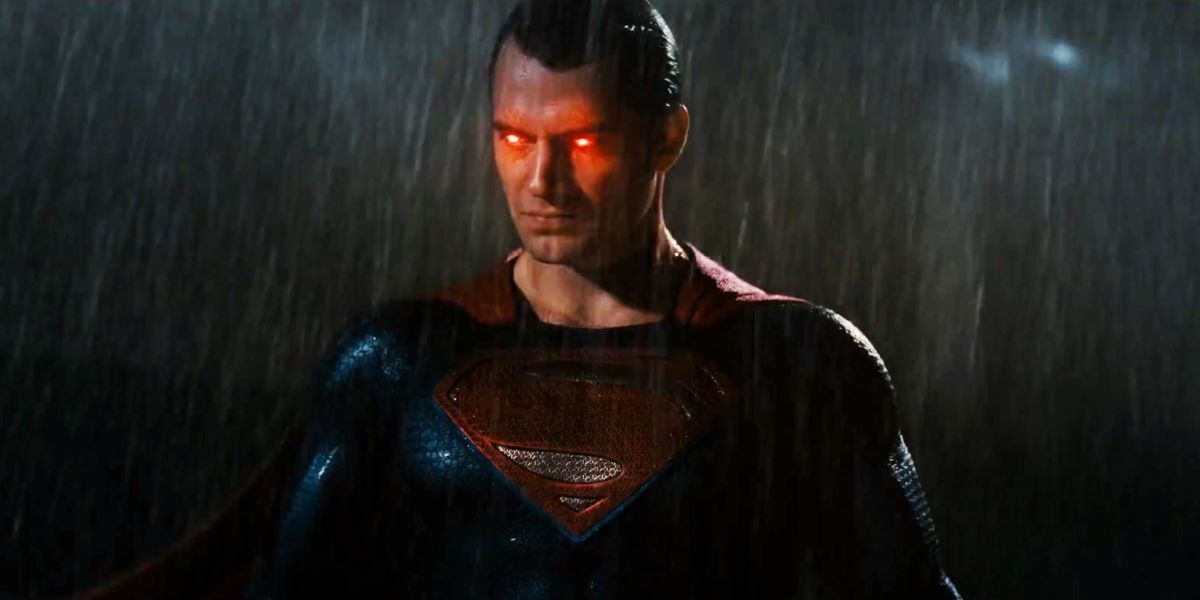
BATMAN Vs. SUPERMAN

 YOU ME & CINEMA - BATMAN VS. SUPERMAN REVIEW

 The greatest gladiator match on earth - Son of Krypton against Bat of Gotham, this is not one to be missed, this one has to be witnessed on the big screen. If Marvel redefined the scale of Superhero movies by bringing their biggest characters together, DC has now begun rolling out its own version of heavy duty multi-superhero flicks, and it is reason enough to get excited. But the hype ends the moment you enter theatres. From that point it is only the quality of the movie that can decide whether it wins over the viewer. Does this scripting coup win the viewer?

It starts when Superman is first introduced to humanity, from Man of Steel. We have Bruce Wayne
watching from the sideline as the new hero gets the adulation. What does he feel? The Bruce Wayne from Nolan's universe would have been relieved that he can finally retire, rest his cape and mope around in peace. But this is Zack Snyder's universe and we are not sure about what Bruce feels. Is he insecure, is he confused, or is he jealous? We are not sure at first. Turns out that is how the entire world feels about Superman. It is this insecurity that Lex Luthor wants to prey upon.

Batman vs. Superman starts slow and is in no hurry to pick up the pace. Both Batman and Superman view each other with suspicion, and someone's stoking the fire quite strategically. This though takes quite a long while. The proceedings are dull and we are left searching for moments of adrenaline. The story does keep moving ahead, you can see the isolated dots coming together slowly, but very few moments get the excitement going. That Batman is someone with deep seated psychological insecurities due to a childhood tragedy is well known. Zack Snyder probes that hard, giving us a couple of sequences that are obviously dreams, which seem to slow things down further. You begin to feel that things are taking too long, when finally the Bat and the Superman come face to face. That is really when the film clicks into gear after a fair amount of drifting.

The plot thickens and comes together soon after that. If  Bruce Wayne’s haunting childhood memories are inseparable from Batman movies, so is Krypton inseparable from a Superman movie. The Kryptonite angle is built up slowly and surely around Lex and then there is the final showdown. The usual graph of a superhero movie! What should appeal here is the Batman vs.  Superman angle, which one feels is explored more at a psychological level rather than a more entertaining popcorn level. That could have been very interesting in the hands of a skilled director, more Nolan territory. Subtlety is not Zack Snyder’s forte and so much of it looks more forced than fluid.

And once we are at the business end of the movie, that is when the protagonists have all come to the
right side and are now up against the anatagonist, Zack Snyder jumps onto his style of film making – large scale destruction. If you think he had peaked with Man of Steel, think again before you see this one. We don’t know how many cities he has blown up in the final showdown, frankly we lose count because it movies all the way from some port to Gotham city, burning almost everything in its path. For audiences who are accustomed to the usual Hollywood superhero movie, this is more yawn-inducing stuff as there is little or no originality in the way these confrontations are conceived. Die hard Batman and Superman fans can whistle for a while, but even they go quiet after a while. DC needs someone more inventive, not a technical behemoth like Zack, at the helm of things.

It is obvious that the plan is to dazzle us with a lot of action - big, bombastic action. But with so many superhero movies these days, it is a hard thing to impress audiences that way. What we do enjoy are the little moments, like the ones we saw in the trailer, the ones where the Batman smartly takes down a dozen or so guys, like the one where Batman and Superman fistfight each other, or the small game of wits between Bruce Wayne and the Wonder Woman. The Script, however, does not allow enough room for more such moments because the big action cannot wait. Also disappointing is the complete lack of cheer or brightness in the movie. The Nolan shadow of grim and dark superhero movies hangs on over DC – get rid of it already, please. That’s something only Nolan can do well. Here, we get a movie which looks and feels like it is always waiting for doomsday to happen, as if it is inevitable, as if there is a sword hanging over the world, when the audience can’t frankly see it. We are here to have a good time, but the movie just won’t have any of it, it is too busy being serious. Hardly anyone smiles on screen, except of course for the megalomaniac villain.

That brings us to Jesse Eisenberg who gets to play perhaps the first big ticket character of his career
after Zuckerberg, that is. He is required to play someone one dimensional, and even though he tries to do that with subtlety it doesn’t look that great, the shadow of the Joker lingers on, one guesses. The thoughts that he echoes are also quite similar to what the Joker said, like how someone all powerful cannot be all good and vice versa. Someone who does abominations for the sake of it, someone who couldn’t escape the abominations of his father! The set up of Wonder Woman too has fleeting similarities to that of Selena Kyle from the Dark Knight Rises. These observations just show how big a shadow Nolan cast with his trilogy and how hard they are to forget. This script does not challenge its lead players much. Henry Cavill has to look morose or angry, while Ben Afleck has to look pensive or angry, and there is nothing much in between. The epilogue, even though stretched a bit, gives us glimpses of how the Justice League is going to come together in the coming years and who their adversaries are going to be. The way it panned out gives us hope that this franchise will get better, that this was just the first act of a grand play, the one that sparked off bigger things. But DC will have to rethink its strategy of making superhero movies. If they are going to go all out on heavy duty VFX action with cities crumbling like packs of cards, they must remember that they are very close to saturation. Watch Batman vs. Superman because it is a dream union of superheroes, there are moments (even though only a few) where you can scream your lungs out, there are genuine goose bump moments, but it all does not add up into a great movie. Worth a watch nonetheless.

2.5/5
Dream duo, grim setting, heavy VFX, middling movie!
Tuesday, 11 November 2014

Does Nolan challenge free will? Random thoughts on Interstellar

Interstellar takes on many heavy concepts and ideas that may appear daunting to most of us. Relativity and space-time continuums are fully understood by only the best of minds, and yet Nolan finds a way to make things clear for us. One thing in Interstellar that he may have implied, intentionally or otherwise, is that free will is non-existent; or maybe I am wrong.

Let’s look back at Interstellar (spoiler alert for those who haven’t seen the movie yet). When Cooper first leaves his daughter for NASA and the mission that follows he is already behind the bookshelf screaming ‘STAY’ and saying the same through Morse. In fact, he was there even before, when his 10 year old daughter noticed books and things falling off the shelf without explanation and thought it was a Poltergeist. That is, Cooper was present on both sides of the bookshelf at the same time, or perhaps at all times. Cooper behind the bookshelf is not able to convince the Cooper on the other side to change his mind about the NASA mission. That is, try as he may, the Cooper behind the bookshelf is not able to change the past. Then again, the terms past, present and future make no sense in a space time continuum where any point of time is freely accessible at any given point of time.

So, Cooper behind the shelf is not able to change ‘the past’, and therefore we have to consider that he might also not be able to change the ‘future’ (because they are only different points of time in a continuum that is already laid out). So, what is ‘Cooper behind the shelf’ there to change? Is he there to change anything at all, or is he there because that is what space time has dictated for him? In other words, is he (and by extension of the definition, everything in the universe) a pawn in space time, being and doing only what space time dictates under the presumption that it is ‘free will’?

Let us consider this for example. Cooper arrives behind the bookshelf after being cast through a blackhole. At this point of time he knows that the entire mission was a sham and that the chances of getting humans off the planet are miniscule at best, or even non-existent. Yet, he ends up conveying the coordinates of NASA to Cooper through the grains of sand by means of binary code. Why would he do that when he knows that the operation itself is a sham, unless it is because of the fact that ‘free will’ does not exist? Another point of course is how Cooper behind the shelf knows the coordinates of NASA? Cooper himself arrives at NASA only because Cooper behind the shelf gave him the coordinates, who in turn knows it only because he was Cooper many years back; it is a kind of ‘chicken and egg’ situation. This means that space and time are laid out for infinity and free will does not exist.


Another question that intrigues is whether ‘Cooper behind the shelf’ is always ‘behind the shelf’? As shown in the movie, the space time continuum behind the girl’s bedroom collapses once Cooper behind the shelf has conveyed the equation through Morse. Now, through the movie, we see that time is a dimension that is laid out and that every minute past, present and future, exists at all times. So, when the space time continuum behind the bookshelf is ultimately collapsed, does it mean that ‘Cooper behind the shelf’ has ceased to exist forever? That is, with the continuum not existing, does Cooper ever get to be behind the shelf, and by means of that save the world? One can argue that the continuum has collapsed only after Cooper has done what he had come to do. But, when a continuum is collapsed, doesn’t it mean that all points of time in that continuum have also been wiped out as a result? That is, if a continuum does not exist, how can any point of time in that continuum have actually existed? This means that once the continuum has collapsed, ‘Cooper behind the shelf’ is essentially wiped out, and so are his actions. So, who is the little girl’s ghost? Just random thoughts that occurred after watching Interstellar.

Saturday, 8 November 2014

INTERSTELLAR : Nolan masterstroke!

When Christopher Nolan makes a movie, you wait for it with great interest. He has never disappointed, never failed to intrigue and never failed to give you goosebumps with the way he finishes a movie. He is one of the most, if not the best, talented storytellers of our times. And he has invented new levels of complexity in storytelling every time he has made a film. Maybe the Dark Knight trilogy is the only time he really conformed to the accepted norms of making films for wide audiences. But, otherwise, he has always been one to break new ground with the sort of themes that he explores. Interstellar takes his experimental exploits to a whole new level.

In Interstellar  he weaves together concepts and emotions that can never be associated even in the wildest imaginations. He takes astrophysics, quantum mechanics, relativity, space-time distortions, black holes, worm holes, parallel dimensions, continuums, gravity and weaves them all into a deliciously complex narrative, and the thread that holds all these heavy concepts together into one solid story love, the love of a father for his daughter and his will to give her a good life.

We have seen movies about outer space, aliens, planets, apes, asteroids, comets, space expeditions,
satellites, space stations, and most recently space accidents, which Alfonso Cuaron so brilliantly told through Gravity. But, never has the science of outer space been taken so seriously in a movie. We are not talking jet propulsion and mechanics here, but quantum mechanics and relativity; the kind of stuff that Einstein and his peers like to deal with. It would have been a nightmare to conceive a script that has its foundations on these concepts, and yet Christopher Nolan (co written by Jonathan Nolan) manages to get through to audience about what he wants to convey. A brilliantly simple explanation about what a worm hole is all about is one such instant (now we all know what the worm hole from The Avengers might have been).

The premise is pretty straight and simple. Earth is no longer getting better for humans to live. The blight wants to take over the earth and so if man wants to survive he better look for other places. NASA, long shut down, or so the world thought, had detected an anomaly in space time a long time ago and believed that answers for a new home lay on the other side of the hole. Now, they have the clues that came from probes that they sent long ago, and they need a team to go in and make sure.

It is difficult to sum up what Interstellar is all about because it encompasses so much. Be it the relativity on the planet that takes 7 earth years for every hour, be it the sheer desperation of a scientist to live that made him let down his entire team, maybe entire humanity itself, the sacrifice of a robot and an astronaut to get to the heart of a black hole so that they can find the answers necessary to save humanity. And most importantly, how ever second in a girl’s room is captured and laid out as a huge array to space time so that she can one day learn the answers that will save humanity. It is, above all, how a father’s love makes him find a way back to his daughter, and how she finds a way out for humanity.

Interstellar is outlandishly imaginative, some times even difficult to believe, but Nolan does not leave anything unexplained (except who‘THEY’ are?) The foundations of his story and screenplay are laid
on the complex theories of physics that we have heard about but never really understood. Some of it might appear plain impossible (like how a man can survive a fall through a black hole), but most of it is possible, even though not probable. And, it is brilliantly visualized showing the stoic beauty of space and alien landscapes of planets that might be our homes in centuries to come. Even though it is touted as a space adventure, the pace and turning points of the script are never forced. In fact, Nolan spends almost the entire first hour setting up the premise, using nothing but drama and the father-daughter relation, before starting out on the interstellar adventure. That restraint shown in writing and making is the hallmark of a great film maker. That is not to say that Interstellar does not have its share of pop corn moments or melodrama; like the mobile docking of the ship to the station and the final meeting of father and daughter, but they are acceptable in an extremely well written piece that spans nearly 3 hours.

Interstellar is not one for passive viewing. It was written with much thought and it demands a similar effort from you while watching it. Looking at it as just another visual space adventure is a waste of time, as it gives you much to think about too, like how a scientist’s conscience might work in different situations, how time might just be another dimension in our universe which is there but cannot be seen, and about how love can sometimes be a compass that can guide us when all else seems lost. Interstellar demands you to travel with it, not be a mere spectator. And be sure, it is a journey worth taking. Its brilliantly complex writing and film making, which beautifully simplifies what many great scientists have meant over the decades.

And, yes Mathew Mc Conaughey, Anne Hathaway, Jessica Chastain are the lead cast, but the script overpowers their presence, and Matt Damon and Michael Caine turn out quite uncharacteristic to what they have done till now.

Interstellar: Don’t just watch – experience it

4/5

Sunday, 22 July 2012

The Dark Knight Rises: Review

More Bruce and Bane than Batman!

‘If you want peace, prepare for war’, goes a saying. Gotham is at peace, but they are not preparing for war. Harry Dent is an immortalized hero. Bruce Wayne is a recluse in his mansion and Batman is an evil who has been forgotten as history by the people of Gotham. Eight years after he was last seen, the Dark Knight Rises again. One last time for Gotham, for his people, but more than everything because this is the only way he can reclaim his life.

The Dark Knight Rises; the way the legend ends (as they claim it does) is as grim and serious as a Batman movie has ever got. A constant feeling of numb brooding, of intense agony, of pain, and the search for one’s redemption or salvation. The Dark Knight is more about the Batman’s internal conflicts than it is about the dangers that face Gotham city; which are pretty immense by the way. That is what is good and bad about the movie at the same time. Almost everyone can connect to Bruce Wayne and the identity crisis that he faces, the pain he feels and his wish to be rid of the weight on his shoulders, to have a life for himself. But, we are in here to see an action movie aren’t we? Yes, we are Batman fans and want to see the Batman. In the end, you have seen more of Bruce than Batman.

The premise is pretty simple. Another dark force, this time appropriately called ‘Bane’, has set his sights on Gotham. But, he is no ordinary thug; he is out to fulfil what he calls the destiny of Rah’s Al Gul, Bruce Wayne’s mentor. So, we know that the Batman is up against a force that is perhaps as strong as him. Add to it the fact that ‘Bane’ is backed by some big power and an underground army; not to forget that Bruce Wayne has remained shut indoors for eight years. He is not as agile as he was, even though he is not willing to admit it.  But, underestimating Bane comes at a heavy price. Batman finds himself in the gallows and Gotham is at the mercy of Bane. Will the Dark Knight Rise again? Sure, we know he will! But, what does it take and what does it cost?

We know that the Batman franchise, especially under Nolan, has not been the usual superhero type movies. Its not all about one powerful villain after another coming and launching a series of attacks and the superhero always arriving on time to save the day. We know that Nolan thinks above that level. But, this time, maybe he stretched it a bit too much. Well, you can give the first hour for solidly establishing the premise. But then, you want to see Batman. He makes a couple of fleeting appearances before disappearing for another hour. Meanwhile, an anarchy is set up in Gotham, all order is overthrown. It is around here that the tedium begins to set in. While Gotham struggles to stand on its feet, so does Batman. Having an entire city on tenterhooks, establishing a parallel law and order system, carrying out executions and preparing for ultimate destruction; all this are shown in so much detail that makes you stifle a few yawns. And, in the middle of that you also have to see Bruce Wayne taking push ups, waiting for his chance in some prison. Legends about Rah’s Al Gul, a child, Bane are all thrown into the mix. All the while, you know how this is going to end, almost! The dank, almost depressing mood in these portions makes The Dark Knight Rises unlike any superhero movie we have seen.

Of course, there are things that are immensely enjoyable too. You get the ever-likeable Morgan Freeman bringing his demeanour and elegant humor into play as Lucius Fox, you have Michael Caine as the butler, the Batpod and assorted paraphernalia, including a car that is not just a car, that have always been Batman specialties. It is these familiar things about the Batman franchise that you enjoy most. Unfortunately, they are overshadowed by other elements, like Bane, the legend of the child who made the great leap and all details of an anarchist occupation. That we don’t see as much of the Batpod as we would like is in itself a big drawback for the movie. The action really doesn’t thrill you, nor does Bane (really no match for the Joker). It’s a plot that could have made for some racy, gripping action. But, Nolan chooses to plod through it, giving us glimpses into the character’s minds and hearts, compromising for pace, holding a few aces for the end, building up to a culmination that leaves no room for questions.

Of course, Nolan succeeds in emotionally connecting us to Bruce Wayne. As his butler puts it, even you want him to drop the cape and find a life of his own. But, the routes Nolan takes to establish the emotional connect spoils the fun of what could have been a superhero entertainer. You will, however, enjoy the wit that occurs in flashes in a few lines, the dramatic entry of The Dark Knight on his Batpod and the adrenaline that accompanies it. You will also remember some of the inspirational lines placed here and there, like, ‘allowing fear to find you once again’. And, most of all you will love the way the movie ends.

Nolan has chosen perhaps the most poetic of endings for the franchise. But, which Hollywood studio in its right mind would end a successful franchise without giving a hint that its not over yet. Where one legend ends, another begins. As the lady at the desk says to the cop who has just resigned, ‘I like your name. You should use it more often, Robin!’ The Dark Knight will rise again.

Verdict: The Dark Knight Rises – but doesn’t fly high!